
Adding an Outdoor Faucet
What to plan for when adding an outdoor faucet or hose bib: where it goes, how it shuts off, backflow protection, and care before a freeze.
Published
Updated
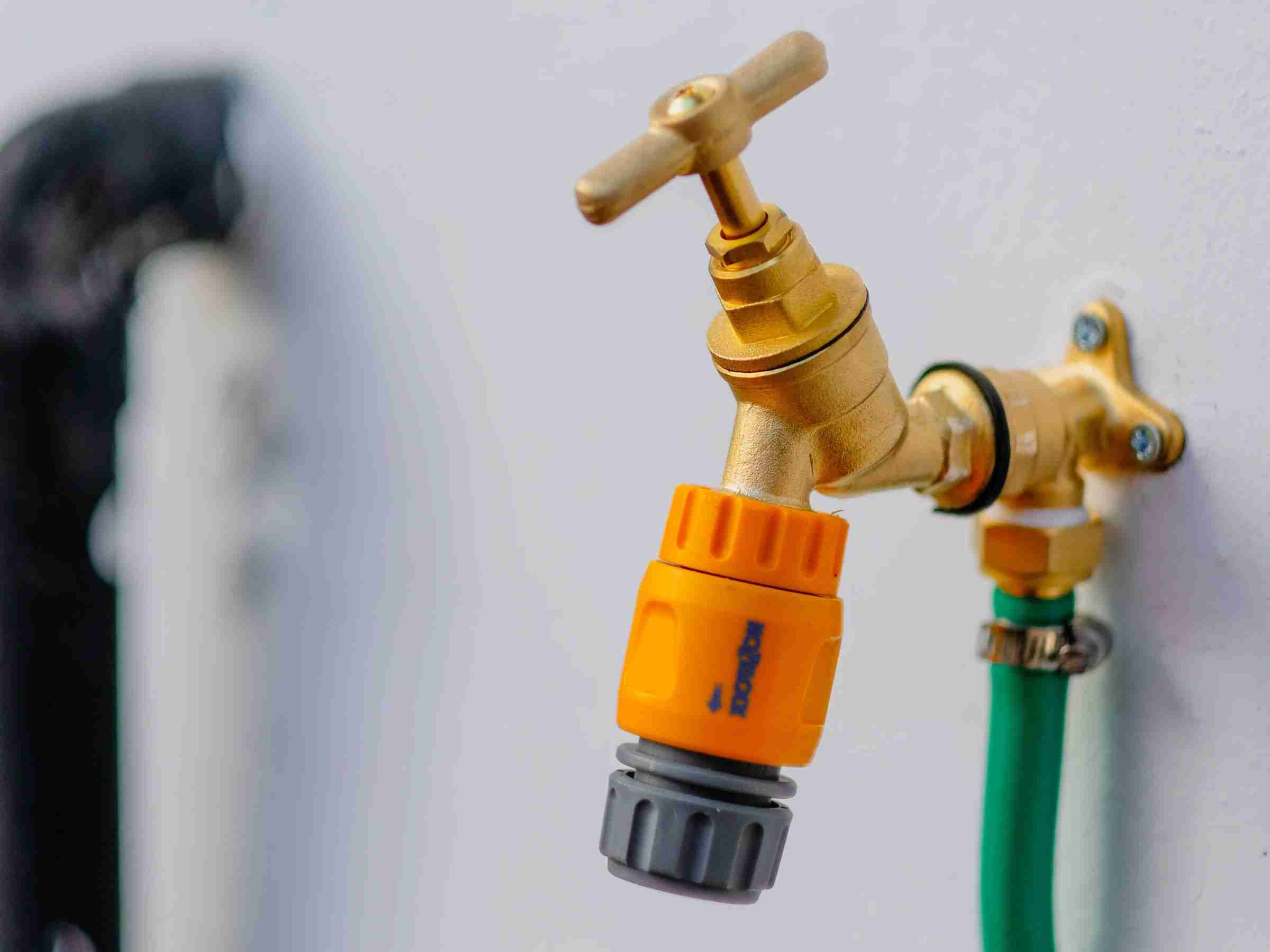
An outdoor faucet gets used for watering plants, rinsing off sand, and washing the car. A good installation starts with the right spot and a proper connection to the supply line, plus protection against backflow and the occasional freeze.
Plan the installation
Pick the spot
Consider the distance to a supply line, how far the hose needs to reach, drainage along the wall, and room to turn the handle and attach a hose.
Confirm the parts
The pipe material, the faucet type (standard or frost-free), the shutoff valve, the wall construction, and local backflow rules decide which fittings you need.
Protect the water supply
Shut off the water and open a faucet to relieve pressure before cutting into a line. Give the new branch its own shutoff valve you can reach, and put a vacuum breaker on the hose connection.
Mount and support the faucet
Make the connection the way the pipe and fitting manufacturers specify. Fasten the faucet firmly to the wall so pulling on a hose does not twist the pipe behind it.
Seal the hole where the pipe comes through the wall in a way that suits the siding, stucco, or block. A poor seal lets water and insects, termites included, into the wall even when the pipe joint is sound.
Test before regular use
Turn the water back on slowly and check every joint you can reach, and the faucet body, for leaks. Try the shutoff, the faucet, and a hose, and watch for movement at the wall.
Do not cover a new connection until it has been checked under normal water pressure.
Maintain and protect it
Check the faucet and nearby pipe now and then for drips, corrosion, and movement; salt air speeds up corrosion near the Gulf. Before a hard freeze, disconnect the hose and cover the faucet. A frost-free faucet drains itself only when it was installed sloping down toward the outside and the hose is off.
A faucet connected to code, with a vacuum breaker, keeps hose water from being pulled back into your drinking water.